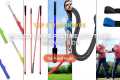
These are two we use every day in the academy — from junior players to PGA Tour Americas athletes — because they actually work. Elite Golf Head Coach Riley Andrews demonstrates how George Jenkins' G Box and G Snap apply directly to EGO's methodology: correct arm structure through the swing, proper shallowing mechanics, and wrist conditions for different ball flight patterns.
━━━━━━━━━━━━━━━━━━━━━━━━ 🔑 G BOX — What you'll learn: - Why the G Box is placed at the navel — the intersection of ribcage and pelvis — and how to adjust placement to isolate each segment - The lead box represents the coronal plane — how far that line rotates tracks the full range of your ribcage and pelvis turn - The three-phase arm sequence: NO arm load in the backswing (arms stay in front of the ribcage) → rotate the box to face the ball → rotate OUT and load arm lines in transition → fire and unload through impact - Why correct shallowing means the clubhead moves to the trail side while the arm structure and handle stay in FRONT of the player — and how the trail box makes it physically clear when the trail elbow goes posterior (stuck) - How to use both boxes together to feel the full sequence from backswing through transition to impact
🔑 G SNAP — What you'll learn: - What the G Snap click means: your lead wrist has reached the flexion state needed to unload the club through rotation — not arm rolling - How "spinning the clubhead up" via supination and flexion in the lead hand builds a stronger face position at the top — and why that lowers the rate of closure through impact - Why high ball speed players (PGA Tour, elite junior males, 165-190 mph) need a stronger face at the top to reduce the chance of catastrophic misses — and what happens when they don't have it - Why DJ, Hovland, and Brooks Koepka bow the lead wrist — and why Rory, Faldo, and Jimmy Walker cup it — and what that means for your own ball flight - The release pattern: flexion-to-extension in the lead hand, extension-to-flexion in the trail hand — and how the G Snap trains it with audio feedback ━━━━━━━━━━━━━━━━━━━━━━━━
These tools teach the same principles you'll find throughout the EGO system. Get the Lower Body Action Blueprint FREE 👉
⏱️ TIMESTAMPS: 0:00 – Introducing George Jenkins' training aids — unpaid, used daily in the academy 0:15 – G Box overview: placement options and what each position trains 1:57 – Lead side G Box: the line represents your coronal plane 3:10 – Forward Golf and G4 shoutouts 3:40 – Why arm lines should be unloaded in the backswing — and what "loaded" actually means 5:00 – The three-phase sequence: no load → transition load → fire 6:00 – Arms staying in front: the key to correct shallowing with the G Box 7:35 – Trail side G Box: how the second box teaches arm structure in transition 8:00 – What happens when the trail elbow goes posterior — stuck, demonstrated 9:00 – Shallowing the clubhead while keeping arm structure anterior — both boxes together 9:49 – Introducing the G Snap — lead hand vs. trail hand versions 10:29 – What the G Snap click tells you about your wrist flexion state 11:33 – Two ways to load the club: radial deviation vs. supination + flexion 12:00 – Why a stronger face (more bow) slows the closure rate — and who needs it 13:34 – High ball speed players: why they need a stronger face to control the clubface 14:10 – The G Snap in action: turn, snap, organize, unload 16:45 – The release pattern: flexion-to-extension lead hand, extension-to-flexion trail hand 17:37 – Full swing with the G Snap — what the correct unload looks and feels like 19:55 – Summary: how both tools reinforce the EGO movement system
━━━━━━━━━━━━━━━━━━━━━━━━ ABOUT ELITE GOLF ONLINE Elite Golf Online gives you 400+ structured video lessons, 8 premium Masterclasses, unlimited personalized swing analysis, and weekly live Q&As with our coaching team. For golfers who want more than tips — a real system to lower your scores.
🔗 START IMPROVING YOUR GAME: 🎓 Free Lower Body Action Blueprint → 🌐 Website →
Read More
By: Elite Golf Schools Title: The Two Golf Training Aids We Actually Use — And How to Use Them Right Sourced From: www.youtube.com/watch?v=NX-zfF9zOGQ